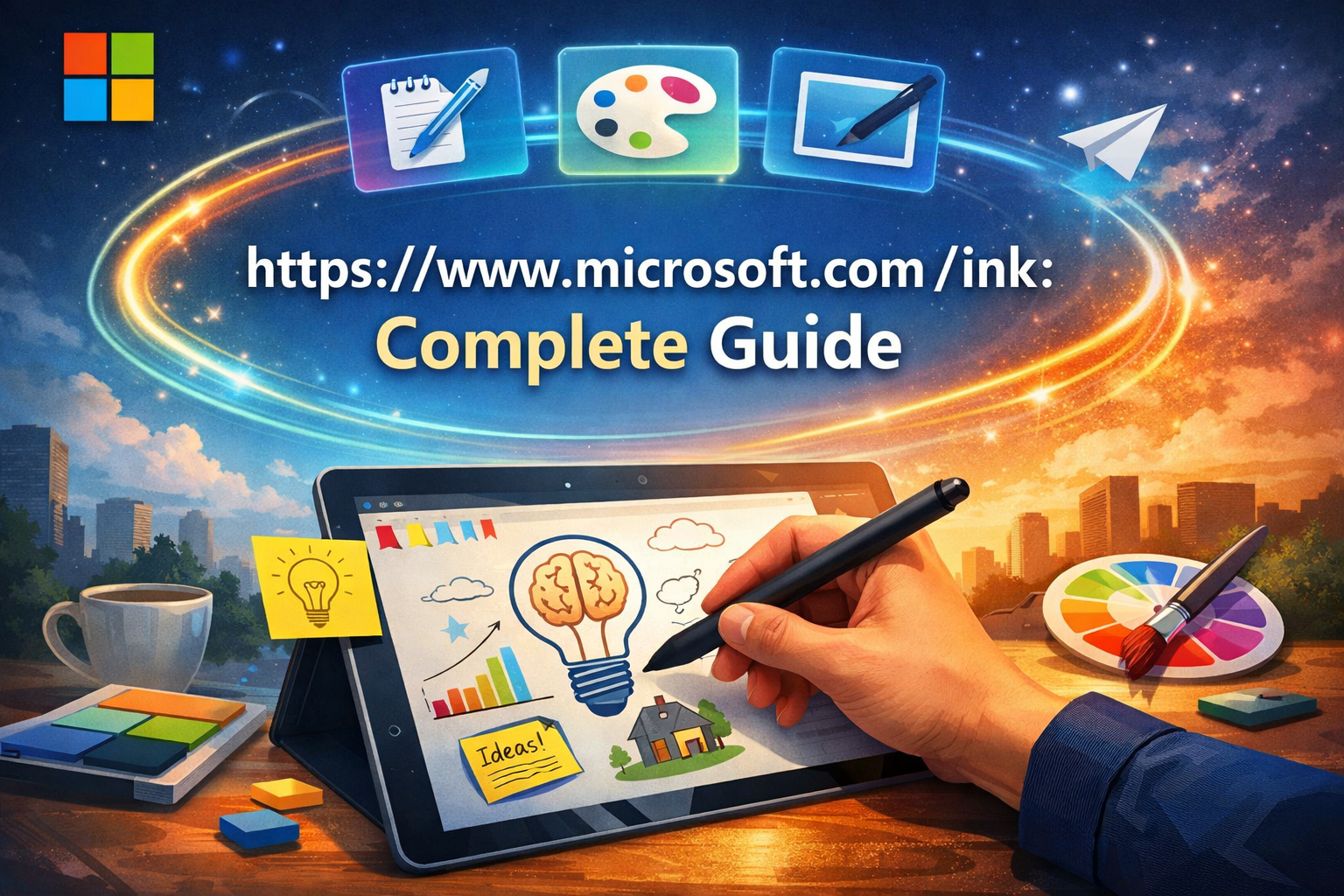
In today’s digital world, writing and drawing are no longer limited to paper and pen. Microsoft has transformed the way users interact with their devices through Microsoft Ink, a powerful feature designed for natural handwriting, sketching, and creativity. Available through the official Microsoft Ink platform at https //www.microsoft.com /ink, this technology bridges the gap between traditional pen usage and modern digital tools.
This complete guide will help you understand what Microsoft Ink is, how it works, its features, benefits, and who should use it.
What Is Microsoft Ink?
Microsoft Ink is a built-in Windows feature that allows users to write, draw, and interact with their device using a digital pen, stylus, or touch input. It is specially designed for touchscreen laptops, tablets, and Surface devices, providing a smooth and realistic pen-on-paper experience.
Through Microsoft Ink, handwriting becomes digital text, sketches turn into editable drawings, and notes become searchable content. The official page https //www.microsoft.com /ink explains how Microsoft Ink integrates seamlessly across Windows apps and devices.
How Microsoft Ink Works
Microsoft Ink works by detecting pen pressure, tilt, and movement on compatible touchscreen devices. When you use a digital pen:
- The system recognizes handwriting
- Converts ink into text (if needed)
- Allows drawing and sketching with precision
- Syncs notes across Microsoft apps
The experience feels natural, just like writing on paper, but with the added advantage of digital flexibility.
Key Features of Microsoft Ink
Microsoft Ink comes with a variety of useful features that enhance productivity and creativity.
1. Ink Workspace
Ink Workspace is a dedicated area where users can quickly access pen-enabled tools like Sticky Notes, Sketchpad, and Screen Sketch. It keeps everything pen-related in one place.
2. Handwriting Recognition
Microsoft Ink can convert handwritten notes into typed text. This is extremely helpful for students, professionals, and anyone who prefers writing over typing.
3. Drawing and Sketching Tools
With pressure sensitivity and tilt support, artists and designers can draw naturally. The tools offer different pen types, colors, and thickness options.
4. Screen Annotation
Users can write directly on screenshots, webpages, and documents. This is ideal for presentations, teaching, and feedback sharing.
5. App Integration
Microsoft Ink works smoothly with apps like:
- Microsoft OneNote
- Microsoft Word
- Microsoft Whiteboard
- Microsoft Edge
- Paint and Paint 3D
Benefits of Using Microsoft Ink
Using Microsoft Ink provides several advantages over traditional input methods.
Natural Writing Experience
Microsoft Ink feels intuitive and comfortable, especially for users who think better while writing.
Improved Productivity
Quick note-taking, instant sketches, and easy annotations help users work faster and more efficiently.
Better Learning
Students can write notes, solve equations, and draw diagrams, which improves understanding and memory.
Creative Freedom
Artists and designers enjoy a flexible digital canvas without losing the feel of real drawing.
Eco-Friendly
Digital notes reduce paper usage, making Microsoft Ink an environmentally friendly option.
Devices That Support Microsoft Ink
Microsoft Ink works best on devices with touchscreens and pen support, including:
- Microsoft Surface Pro
- Microsoft Surface Laptop
- Surface Go
- Windows touchscreen laptops
- Compatible stylus-enabled tablets
You can find supported devices and details on https //www.microsoft.com /ink.
Who Should Use Microsoft Ink?
Microsoft Ink is useful for many types of users:
Students
For note-taking, drawing diagrams, and studying efficiently.
Teachers
For digital whiteboards, lesson explanations, and marking assignments.
Professionals
For meetings, brainstorming, presentations, and document annotations.
Artists and Designers
For digital sketches, concept art, and creative design work.
Everyday Users
Anyone who prefers writing with a pen instead of typing.
Microsoft Ink vs Traditional Typing
While typing is fast, it lacks the flexibility of handwriting. Microsoft Ink offers:
- More personal expression
- Better idea visualization
- Faster brainstorming
- Easier drawing and diagram creation
This makes Microsoft Ink a powerful alternative to keyboard input.
How to Get Started with Microsoft Ink
Getting started is simple:
- Use a Windows device with pen or touch support
- Connect a compatible stylus
- Enable Ink Workspace from taskbar settings
- Open pen-supported apps
- Start writing or drawing
For official setup instructions, visit https //www.microsoft.com /ink.
Future of Microsoft Ink
Microsoft continues to improve Microsoft Ink with better handwriting recognition, AI integration, and enhanced pen responsiveness. As digital workspaces grow, Microsoft Ink is expected to play an even bigger role in education, business, and creative industries.
Conclusion
Microsoft Ink is more than just a digital pen feature it’s a complete creative and productivity tool. From note-taking and drawing to professional annotations and learning, it enhances the way users interact with Windows devices.
If you want a natural, flexible, and powerful digital writing experience, Microsoft Ink is the perfect solution. To explore features, supported devices, and updates, visit the official page at https //www.microsoft.com /ink and unlock the full potential of digital ink.